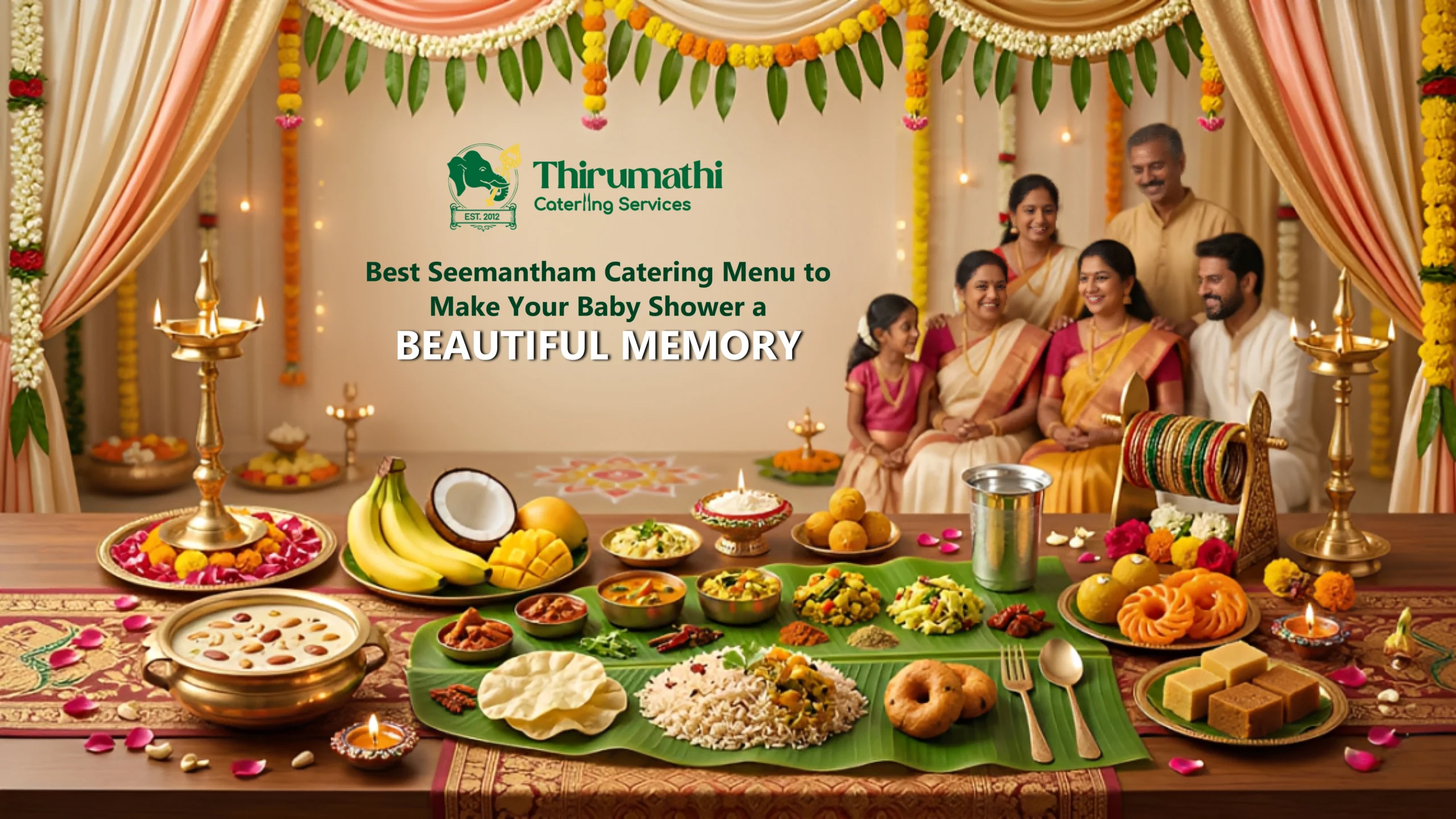


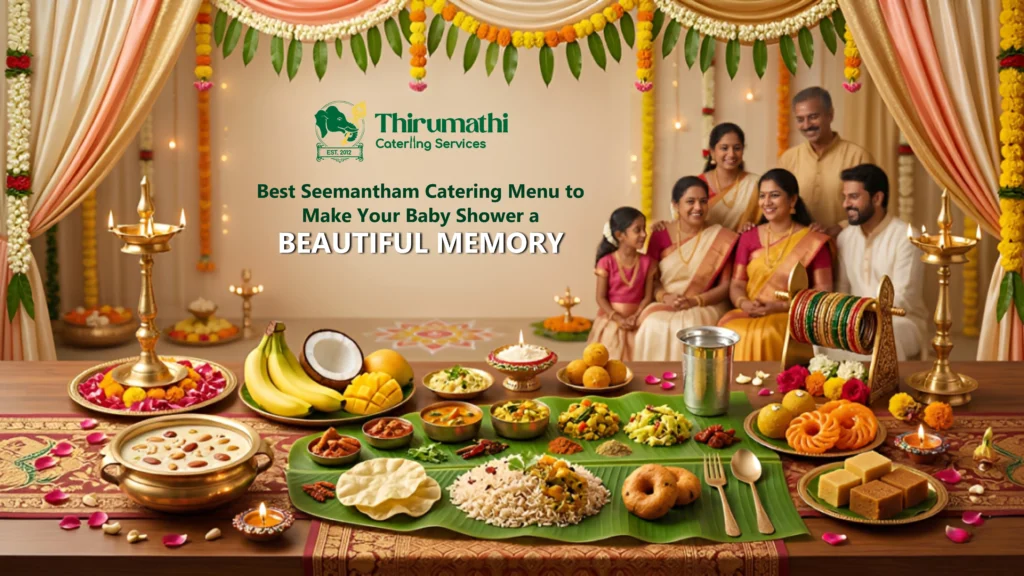
Seemantham, also known as Valaikappu, is one of the most sacred and joyful ceremonies in Tamil culture. It is a traditional baby shower celebration held to bless the expectant mother and the unborn child. Family members and relatives gather together to offer prayers, gifts, and blessings for a safe and healthy delivery.
Food plays a very important role in a Seemantham ceremony. The dishes served during the celebration are not just meant to satisfy hunger but also carry cultural significance and blessings for the mother-to-be. A traditional Seemantham feast is usually prepared with pure vegetarian ingredients and served with love and care.
At Thirumathi Catering — the best veg catering in Madurai — we specialise in preparing authentic Seemantham menus that follow traditional Tamil cooking methods. Our catering services ensure that every dish reflects the warmth, purity, and cultural richness of this beautiful ceremony.
Unlike regular events, Seemantham is a deeply cultural and spiritual ceremony. The catering menu must reflect the values and traditions of the family.
Here are some key aspects that make Seemantham catering unique:
Seemantham ceremonies always follow a 100% vegetarian menu. This tradition symbolises purity and auspiciousness.
The dishes served should be nutritious, mild, and easy to digest, ensuring comfort for the mother-to-be.
Certain dishes like Paal Payasam, Kozhukattai, and Curd Rice are considered essential for the ceremony.
Food must be prepared using fresh ingredients and hygienic cooking methods to ensure health and safety for everyone.
At Thirumathi Catering, we maintain strict quality standards. We never use Dalda, Ajinomoto, artificial colours, or preservatives, and we prepare all dishes using fresh vegetables and pure ingredients.
A Seemantham celebration usually begins with a wholesome breakfast followed by a traditional banana leaf lunch.
A traditional breakfast menu may include:
These dishes create a festive and welcoming start to the celebration.
The highlight of the ceremony is the traditional banana leaf lunch, served with multiple dishes in a specific order.
This balanced menu ensures guests enjoy a rich yet comforting meal.
Certain traditional dishes are considered essential for a Seemantham ceremony.
Paal Payasam
This sweet milk dessert symbolises prosperity and happiness. It is usually served first during the meal.
Kozhukattai
Steamed rice dumplings offered to Lord Ganesha, symbolising blessings and good fortune.
Seedai Snacks
Traditional crunchy snacks prepared for the ceremony.
Avial
A mixed vegetable dish representing harmony and abundance.
Curd Rice
A cooling and comforting dish that completes the meal.
At Thirumathi Catering, we prepare all these dishes using authentic recipes passed down through generations.
Many Seemantham celebrations continue into the evening with light snacks and refreshments.
Popular evening snacks include:
Refreshing drinks like Nannari Sharbat, Rose Milk, and Filter Coffee are also served to guests.
Some families also prefer sweet gift boxes to give guests as a thank-you gesture after the ceremony.
Planning a Seemantham ceremony can be both exciting and emotional for families. Choosing the right caterer ensures that the event runs smoothly and guests leave with wonderful memories.
Thirumathi Catering — the best veg catering in Madurai — is trusted by many families because of our commitment to quality and tradition.
We offer:
From the first sweet dish served to the final cup of coffee, our team ensures that every guest enjoys a memorable dining experience.
If you are planning a Seemantham ceremony in Madurai, Thirumathi Catering will be honoured to be part of your special day.
Traditional dishes include Paal Payasam, Idli, Pongal, Avial, Rasam, Curd Rice, Kozhukattai, and various vegetable dishes served on a banana leaf.
Paal Payasam is considered an auspicious dish in Tamil culture and symbolises prosperity, blessings, and happiness for the unborn child.
Typically a Seemantham meal includes 12–20 dishes including sweets, rice varieties, curries, poriyal, and accompaniments depending on family traditions.